Most parents spend time picking the right size, colour, and design for their kids’ clothes. But the fabric? That often gets ignored – until your child starts itching, sweating through their shirt, or breaking out in a heat rash.
Children’s skin is significantly thinner and more sensitive than adult skin. They’re also physically active for most of the day, which means their clothing needs to work with their body – not against it.
If your child frequently experiences any of the following, the fabric may be the problem – not the fit:
- Skin redness or rashes after wearing certain clothes
- Itching or irritation during or after play
- Excessive sweating at night or during school hours
- General discomfort despite wearing so-called “breathable” fabrics
Understanding the difference between cotton and polyester is one of the most practical things a parent can do when shopping for kids’ clothing.
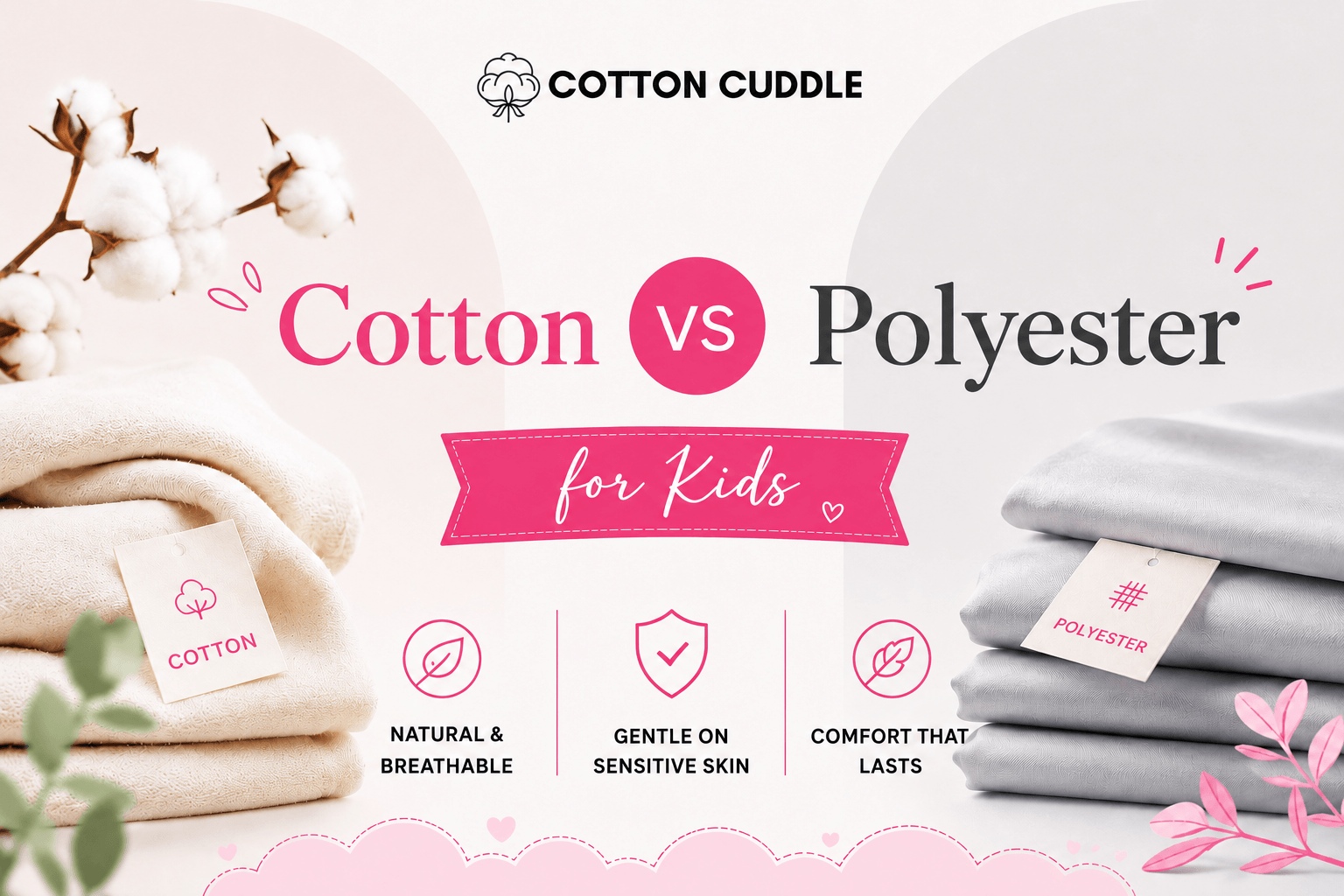
One of the most common questions parents search online is: “Cotton vs Polyester for Kids – Which Fabric Is Better?”
Cotton wins for everyday wear. It’s softer, more breathable, and far less likely to irritate sensitive skin. Polyester has its uses – mainly sportswear and rainy-season clothing — but for daily wear, school uniforms, sleepwear, and playtime clothes, cotton is the safer, more comfortable choice for children.
What Is Cotton And Why Do Dermatologists Recommend It for Kids?
Cotton is a natural fibre grown from cotton plants. It has been the go-to fabric for children’s clothing for decades — and for good reason.
When parents search for skin-friendly clothes for kids, cotton consistently comes out on top because it works in harmony with how children’s bodies function throughout the day.
Key benefits of cotton clothing for kids:
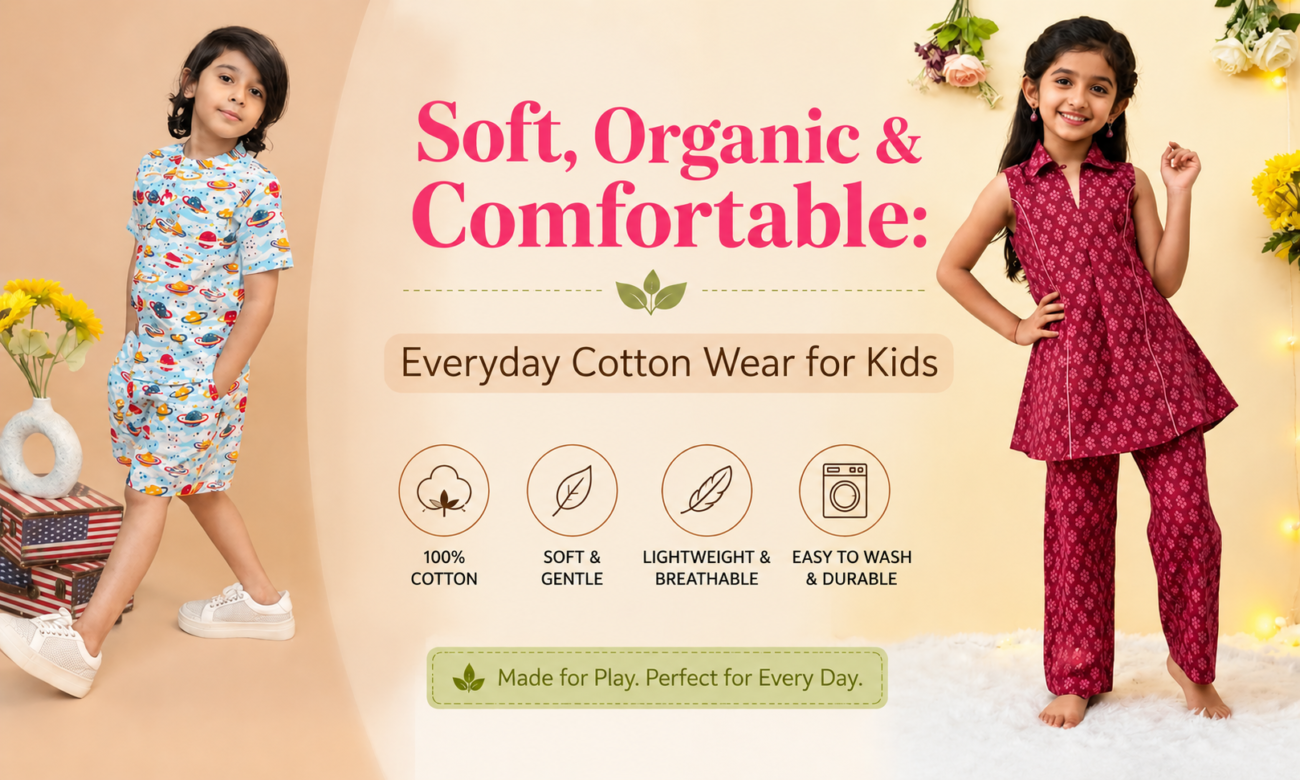
- Breathable: Allows air to circulate freely, reducing trapped body heat
- Moisture-wicking: Absorbs sweat and pulls it away from the skin surface
- Soft texture: Especially important for babies and toddlers with very delicate skin
- Hypoallergenic: Less likely to trigger allergies, rashes, or eczema flare-ups
- Easy to wash: Handles repeated machine washing without losing softness quickly
- Gets softer over time: Unlike synthetic fabrics, cotton often becomes more comfortable with regular washing — a genuine plus for active kids
Cotton is one of the safest, most trusted fabric choices for children across all age groups.
What Is Polyester And When Is It Okay for Kids?
Polyester is a synthetic fabric made from petroleum-based fibres. It’s widely used in children’s clothing because it’s affordable, wrinkle-resistant, durable, and colourfast — meaning colours don’t fade easily after repeated washing.
However, the same properties that make polyester practical for manufacturers make it less suitable for children’s skin.
The core problem with polyester for daily wear:
Polyester does not absorb moisture. Instead of pulling sweat away from the skin, it traps it – keeping your child warm, damp, and uncomfortable. In a hot climate like India, this can quickly lead to:
- Heat rash (prickly heat) from sweat trapped against the skin
- Skin redness and irritation
- Body odour caused by bacteria thriving in a moist environment
- General discomfort during extended wear
When polyester is perfectly fine for kids:
Polyester is not always the wrong choice. There are specific situations where it actually performs well:
- Sports and athletic wear — quick-drying properties are genuinely useful during physical activity
- Rainy season jackets or waterproof outerwear — where moisture resistance is the goal
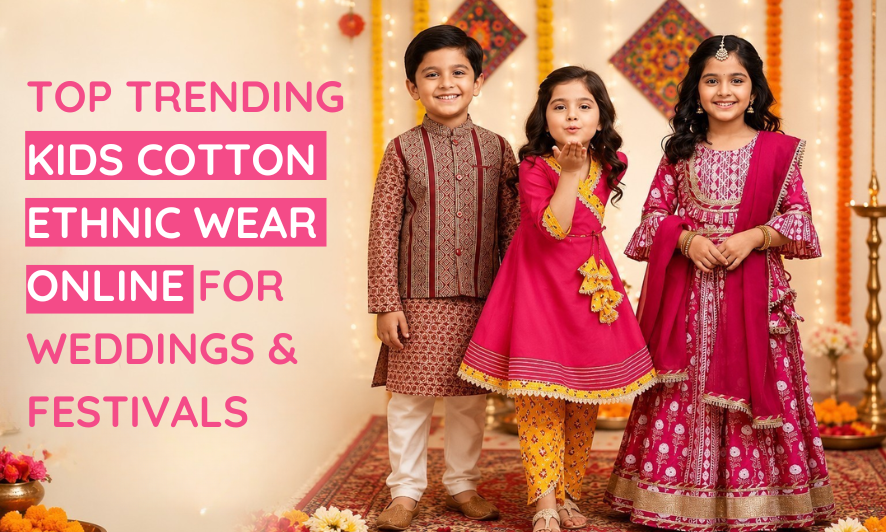
- Festive or occasion wear — worn for shorter periods where prolonged skin contact is not a concern
The key is context. Polyester as everyday, all-day clothing? Not ideal. Polyester as a sports layer or special occasion outfit? Perfectly acceptable.
Cotton for Kids with Sensitive Skin: What Every Parent Should Know
If your child has been diagnosed with eczema, contact dermatitis, or simply has reactive skin that flares up easily, fabric choice becomes one of the most important decisions you can make.
Why cotton is the recommended choice for sensitive skin:
Dermatologists consistently recommend 100% cotton — and particularly organic cotton — for children with skin sensitivities. The reasons are straightforward:
- No synthetic coatings or harsh chemical finishes that remain on the fabric after production
- Allows the skin to breathe rather than trapping heat and sweat against it
- Soft weave reduces friction — friction is one of the most common triggers for eczema flare-ups
- Less static electricity build-up compared to synthetic fabrics, which can further irritate sensitive skin
If you have noticed your child scratching more at night or after a long day in school, switching to 100% cotton sleepwear and daily clothing is often one of the first recommendations parents receive from paediatricians.
Cotton vs Polyester for Kids: Head-to-Head Comparison
| Factor | Cotton | Polyester |
|---|---|---|
| Breathability | Excellent | Limited airflow |
| Skin Comfort | Very soft | Can feel rough after long wear |
| Sweat Absorption | High | Low |
| Suitable for Sensitive Skin | Excellent | May cause irritation |
| Everyday Comfort | Highly comfortable | Can trap heat |
| Summer Wear | Ideal | Often uncomfortable in hot weather |
| Eco-Friendly | Natural fabric | Synthetic material |
Organic Cotton vs Regular Cotton: Is There Actually a Difference?
Yes – and it matters significantly more for babies and young children.
Regular cotton is grown using synthetic pesticides and fertilisers, and is often processed with chemical finishes during manufacturing. While most residues are removed during production, trace amounts can occasionally remain in the finished fabric.
Organic cotton is grown without synthetic pesticides and processed without harsh chemical treatments. For children with sensitive skin, allergies, or eczema, organic cotton provides an added layer of safety and peace of mind.
Benefits of organic cotton for kids:
A more environmentally responsible choice for parents who care about sustainability
- Noticeably softer texture — even compared to standard cotton
- Free from chemical residues that could irritate delicate skin
- Better suited for children with existing skin conditions
Best Cotton Clothing Choices for Kids
Not all cotton clothing is created equal. Here’s a quick guide to help you choose the right cotton garment for each part of your child’s day:
| Situation | Best Cotton Option |
| All-day daily wear | Cotton t-shirts, co-ord sets, casual kurtas |
| School uniform | Soft cotton shirts, breathable cotton trousers |
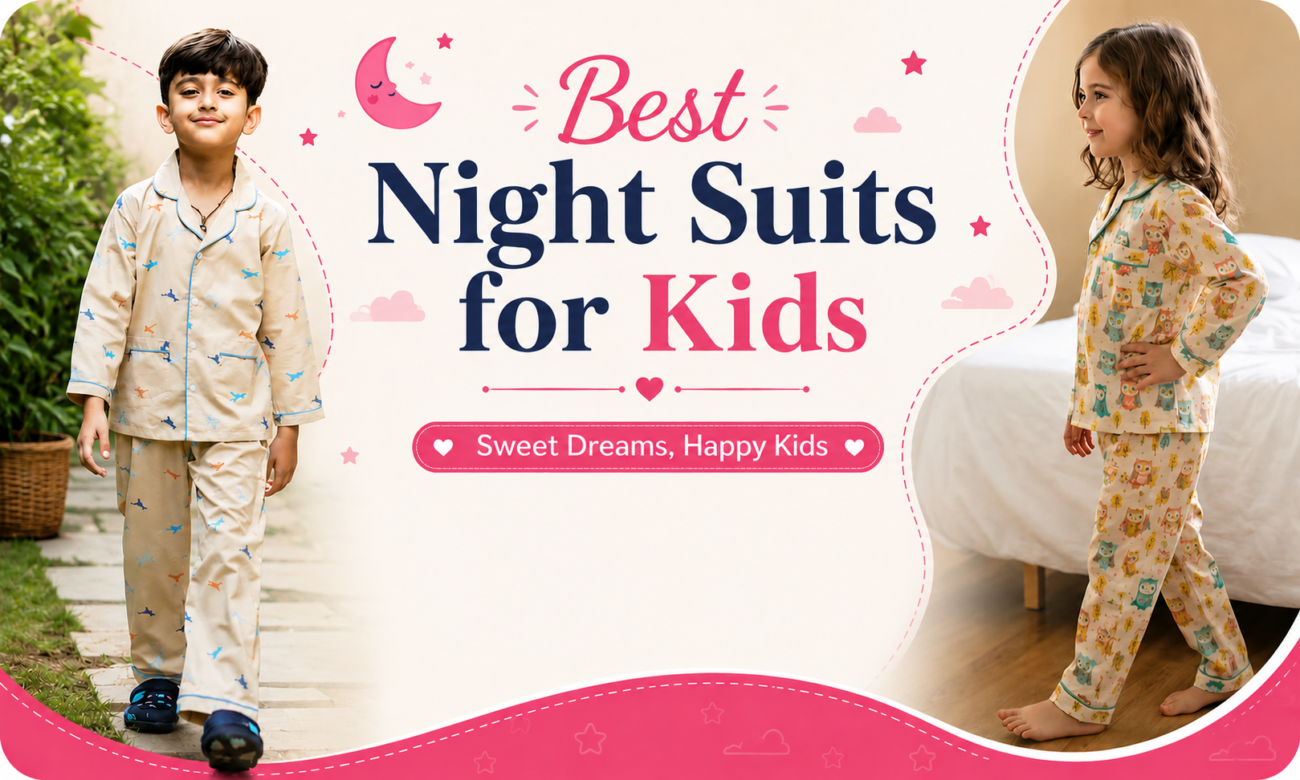
| Nighttime sleep | 100% cotton pyjamas or night suits |
| Summer outdoor play | Light cotton dresses, shorts, cotton rompers |
| Cold weather | Cotton as a base layer under a light jacket or cardigan |
| Babies and newborns | Organic cotton bodysuits, rompers, and sleepsuits |
| Kids with eczema | GOTS-certified organic cotton – unwashed or lightly dyed |
What About Cotton-Polyester Blends?
Many affordable kids’ clothing brands use blends commonly 60% cotton and 40% polyester, or similar ratios. These blends are designed to offer the durability of polyester with some of the comfort of cotton.
Are blends safe for kids?
Blends are generally acceptable for occasional wear. However, they are not recommended as the primary fabric choice for:
- Children with eczema or sensitive skin
- Everyday all-day wear in hot climates
- Sleepwear and nightwear
The higher the polyester content in a blend, the more it will behave like polyester — trapping heat and reducing breathability. For sensitive skin, even a 40% polyester content can cause irritation over long periods.
If a blend is your only option, look for ones that are at least 70–80% cotton.
Why Indian Parents in Particular Should Prioritise Cotton
India’s climate makes this conversation even more relevant. With temperatures regularly crossing 35–40°C in summer across most of the country, organic cotton clothes is not a luxury – it is a necessity.
Children in India spend significant time outdoors, in school without air conditioning, and in active play throughout the day. A child wearing polyester in these conditions will sweat more, feel more uncomfortable, and be at higher risk of heat rash and skin irritation compared to a child wearing cotton.
Breathable, moisture-absorbing cotton clothing is particularly well-suited to:
- Summer months across all Indian states
- Humid coastal regions
- Children who are naturally prone to sweating
- Long school days where the child cannot change clothing
For Indian parents, cotton is not just the comfortable choice – it’s the sensible one.
Polyester isn’t toxic, but it is not ideal for babies’ everyday clothing. Baby skin is extremely sensitive and thin, and polyester’s low breathability can quickly lead to heat rashes and skin irritation. Stick to 100% cotton or organic cotton for babies as much as possible.
It is not recommended for extended wear in warm or hot weather. Polyester traps heat and does not absorb sweat, making children very uncomfortable during summer. Cotton or cotton-dominant blends are a much better choice for summer clothing.
100% cotton – ideally GOTS-certified organic cotton – is the most widely recommended fabric for children with eczema. It is soft, breathable, and unlikely to cause friction or chemical irritation. Avoid polyester, coarse wool, and synthetic blends.
Blends can be acceptable for occasional wear, but they are not ideal for children with sensitive skin or for use as sleepwear. If a blend is necessary, choose one with at least 70% cotton content.
The most common causes are synthetic fabrics like polyester or nylon, chemical fabric finishes, or dyes. Try switching to plain 100% cotton clothing and always wash new clothes before wearing them for the first time.
Standard cotton can shrink slightly in very hot water. To avoid this, wash cotton clothes in cold or warm water and avoid tumble drying on high heat. Pre-shrunk cotton, which many children’s brands now use, minimises this issue.
Conclusion
If comfort, breathability, and skin safety are your priorities – and they should be – the answer is clear.
Choose cotton for: daily wear, school clothing, Boy’s Night Suits, Girl’s Casual outfits , and any situation where your child will be wearing the garment for two or more hours at a stretch.
Polyester is acceptable for: sportswear, waterproof outerwear, and festive clothing worn for shorter durations.
A simple rule to remember: If your child is wearing it for more than two hours, make it cotton.
Children deserve clothing that keeps them comfortable, cool, and irritation-free – not fabrics that work against their skin. Investing in good quality cotton clothing is one of the simplest and most effective things a parent can do for their child’s daily comfort and long-term skin health.